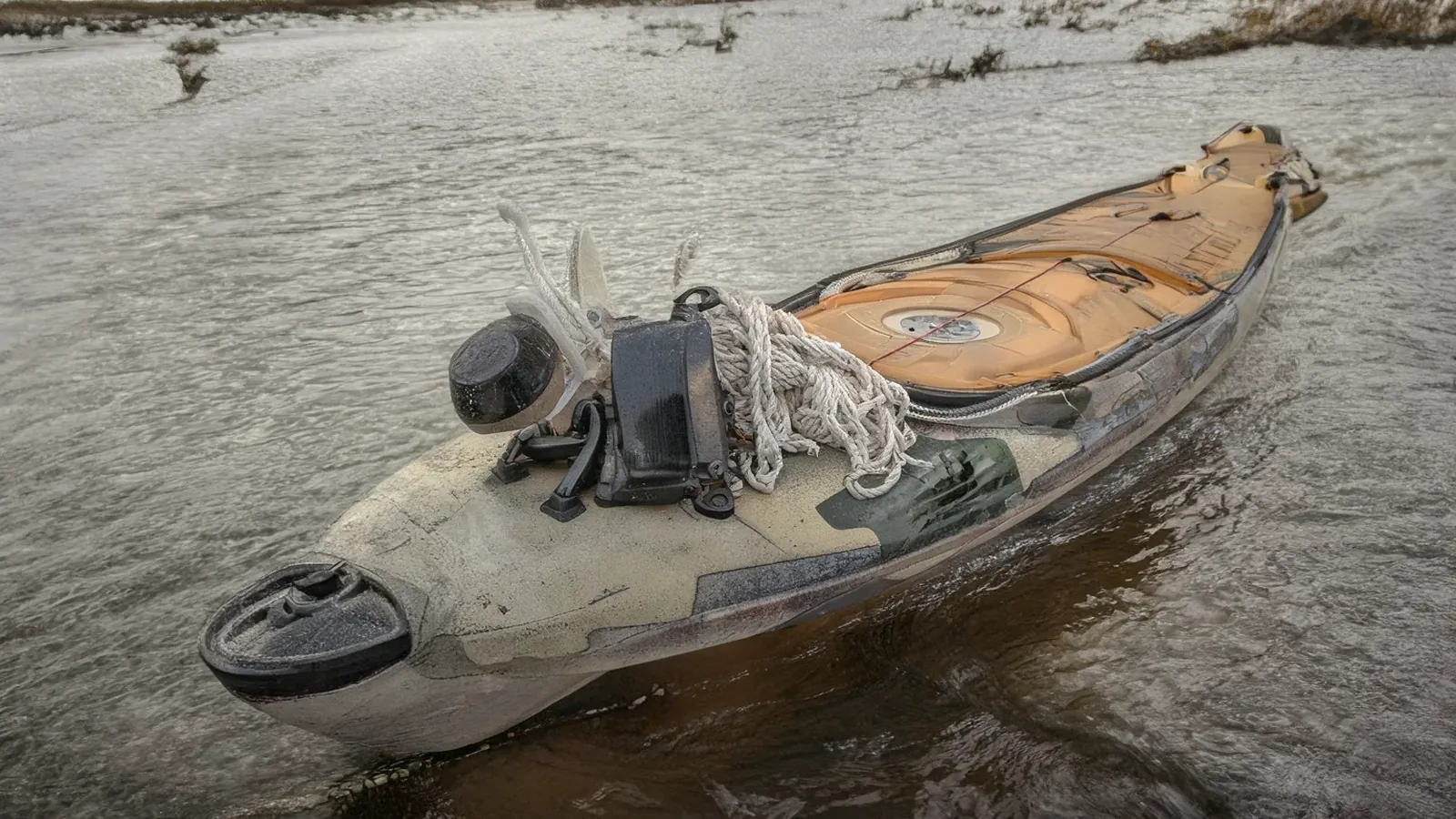
Match the anchor to the water. A 1.5–3.5 lb folding grapnel holds most kayaks in lakes and slow rivers; a stakeout pole pins you silently on shallow flats; a drift chute slows you down without stopping; a Power-Pole Micro does the stakeout job at the push of a button. Add an anchor trolley to any of them.
At a glance
The picks
1. Gradient Fitness Marine Anchor 3.5lb Kit
The best-value complete anchor kit. A four-fluke folding grapnel that packs to 12 inches, plus 25 feet of rope, a stainless snap hook, a buoy and a padded bag — everything a beginner needs in one box.
The cheapest upgrade that changes how you fish. A trolley slides your anchor point bow-to-stern so you can position against wind and current — this kit includes rope, Harken pulleys and stainless hardware.
A cone-shaped chute that fills with water to slow a wind drift, so you cover a flat at a fishable pace. It opens on its own and collapses small. It is not an anchor, and the line is sold separately.
A stakeout pole for flats and shallows. The nylon tip pins into the bottom, the foot doubles as a paddle blade, and the fiberglass tube floats if dropped. It only works in shallow water, but it is silent and takes seconds.
A hand-crank reel that hauls the anchor up for you, so you never lift wet rope over the gunwale. The kit adds a 6 lb Radius anchor, a chute and 45 ft of line, but costs about four times a basic grapnel.
6. Power-Pole Micro Anchor
A 7.5 lb electric spike driver small enough for kayaks and paddle boards. One button drops or lifts the spike, silently. The spike and a 12V power source are extra, so the real cost runs well past the base price — it makes most sense on a motor or pedal rig.
What to look for
Grapnel for depth and rocky or weedy bottoms; stakeout pole for flats under about 6 ft; drift chute to slow a wind drift while you cast; electric spike if you want stakeout without the pole work.
A 1.5–3.5 lb folding grapnel holds most kayaks in lakes and mild current. Heavier is only needed in strong current or wind; lighter packs away easier.
A trolley slides your anchor point from bow to stern so you can set your position and angle to wind and current — arguably more useful than the anchor itself.
Bring enough rope for your typical depth (7:1 scope is a good rule) and a float, so you can drop the line and chase a fish, then return to it.
Frequently asked questions
Both, if you fish varied water. A stakeout pole is faster and quieter in shallow water — push it into the bottom through a scupper or a pole mount and you are set. It cannot reach bottom in deeper water, where a grapnel on enough rope takes over.
A drift chute (drogue) is a fabric cone you drag behind or beside the kayak. It does not stop you; it slows a wind drift so you can cast a flat or a bank at a controlled pace. Clip it to an anchor trolley to set the angle.
A 1.5 to 3.5 lb folding grapnel anchor holds most kayaks in lakes and slow rivers. Only step heavier for strong current, wind or deep water. Pair it with enough rope for roughly seven times your water depth.
A trolley is a loop of rope and pulleys along the side of your kayak that lets you move the anchor attachment point from bow to stern. It lets you set how the boat sits relative to wind and current — a cheap, high-impact upgrade many anglers value more than the anchor itself.
For mild current, yes — the folding flukes grab bottom well. In strong current, size up the anchor and rope, anchor from the bow only (never the stern or side, which can pull the kayak broadside and flip it), and never tie off so you cannot release quickly if needed.
How we chose
Every spec here is pulled from the manufacturer or an authorized retailer and standardized. We rank transparently and never for commission. Full methodology →