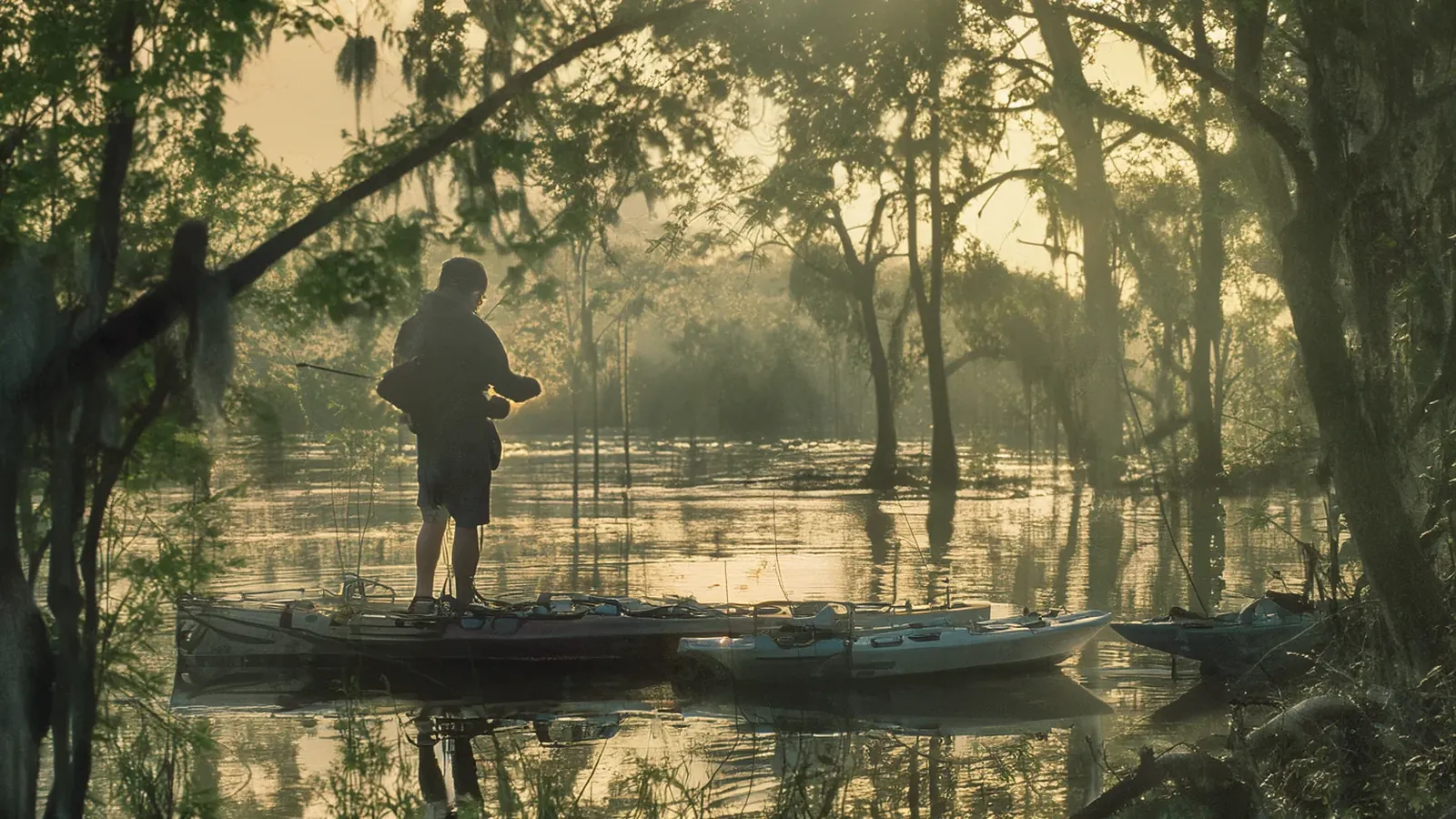
The most stable fishing kayaks are wide (34 inches or more, and 36 or more for standing), flat-hulled and rated to stand on. If you sight-cast standing or fish chop, stability beats speed — we rank stand-and-cast platforms by hull width and design, not marketing claims.
At a glance
The picks
1. Advanced Elements StraitEdge Angler Pro
Drop-stitch floor, stand-to-fight, up to Class III
Catamaran hull, 550lb cap, stand-up tournament kayak
Ultra-stable big-boat features on 12ft
4. Hobie Mirage Pro Angler 14
Flagship 600lb cap; very heavy
MirageDrive 360 Turbo; premium offshore-capable
Stand-up platform, dual battery bays, Propel Drive 701
40in beam, very stable stand-up; hull 138lb
116lb assembled; ultra-stable DoubleU hull EVA deck
What to look for
A flat or pontoon (tunnel) hull gives strong primary stability — steady when flat. That is what you want for standing and fishing calm-to-moderate water.
36–40 inches of beam plus a flat, textured standing deck is the recipe for standing. Narrower "stable" boats are fine seated but sketchy standing.
The most stable hulls are usually the heaviest. Great on the water, harder to transport — plan for a cart or a helping hand.
Frequently asked questions
Width and hull shape. A beam of 34 inches or more for stability (36 or more for standing), combined with a flat or tunnel (pontoon) hull and a stand-rated deck, gives the primary stability you need to stand and cast confidently.
Mostly, but hull shape matters too. A 34-inch tunnel-hull boat can feel more planted than a rounder 36-inch hull. Width is the best single predictor, which is why it drives our stability score.
No — plenty of anglers fish seated their whole lives. Standing helps with sight-casting and fighting fish, but if you mostly sit, you can prioritize speed or portability instead.
How we chose
Every spec here is pulled from the manufacturer or an authorized retailer and standardized. We rank transparently and never for commission. Full methodology →