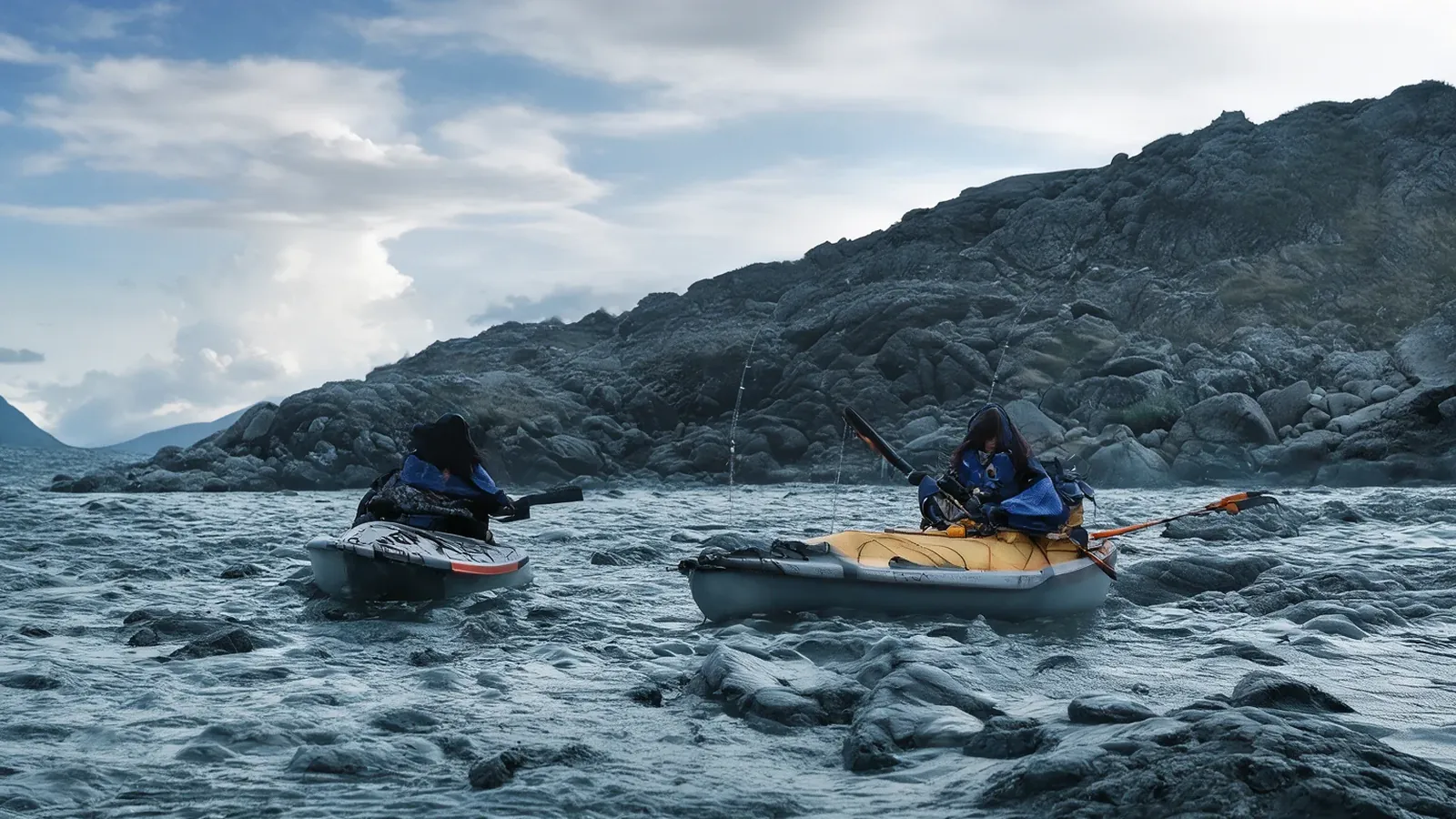
Three rules keep kayak anglers safe: always wear a PFD, dress for the water temperature (not the air), and never paddle without telling someone your plan. Cold water is the most overlooked danger.
Wear your PFD — every time
Coast Guard statistics consistently show that most boating drowning victims weren’t wearing a life jacket. Not stowed — worn. A high-back fishing PFD is comfortable enough to keep on all day, and it only works if it is on your body when you go in unexpectedly. This is the single most important habit in the sport.
Cold water is the hidden killer
Water under about 60°F (15°C) can cause cold-water shock — an involuntary gasp and loss of breath control that drowns strong swimmers in minutes, regardless of air temperature. Dress for the water, not the sunny day. In cold seasons that means a wetsuit or drysuit, not shorts.
File a float plan
Tell someone where you are launching, where you plan to fish and when you will be back. It costs nothing and turns a missed check-in into a fast rescue. Carry a whistle, a charged phone in a waterproof case, and on bigger water a VHF radio. Federal rules also call for a sound signal (a whistle counts) and a white light if you’re out between sunset and sunrise; on coastal waters and the Great Lakes, add visual distress signals.
Read the weather and water
Check wind and the forecast before you go — wind is a kayak angler’s biggest enemy, pushing you offshore and making the paddle back exhausting. Know your limits, stay closer to shore when in doubt, and be honest about conditions. The fish will be there another day.
Frequently asked questions
It’s low-risk when you take basic precautions: wear a PFD, dress for the water temperature, check the weather, and tell someone your plan. The biggest real danger is cold water, not wildlife or waves — cold-water shock can incapacitate even strong swimmers, so dressing correctly matters most.
Federal law requires a US Coast Guard-approved wearable life jacket for every person aboard a kayak. Children under 13 must wear one while underway, and many states also require adults to wear one in certain seasons or on certain waters. Check your state’s rules, and wear it anyway. A worn PFD is the number-one factor in surviving an unexpected capsize — stowed under the seat, it can’t help you.
At minimum: a worn PFD, a whistle, a white light for dusk, a paddle leash, a charged phone in a waterproof case, and clothing suited to the water temperature. On larger or colder water add a VHF radio, a light, and a wetsuit or drysuit.